CITRUSMRKET:Orlando’s Fresh Fashion Squeeze
May 4, 2026
How Nayrouz Olarte Became Part of Orlando’s Cultural Thread
May 13, 2026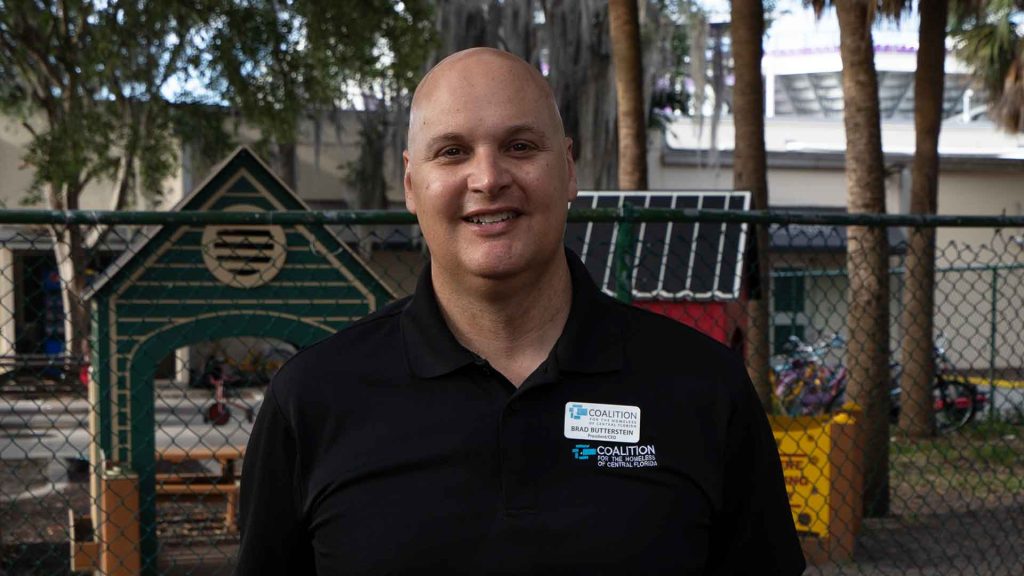
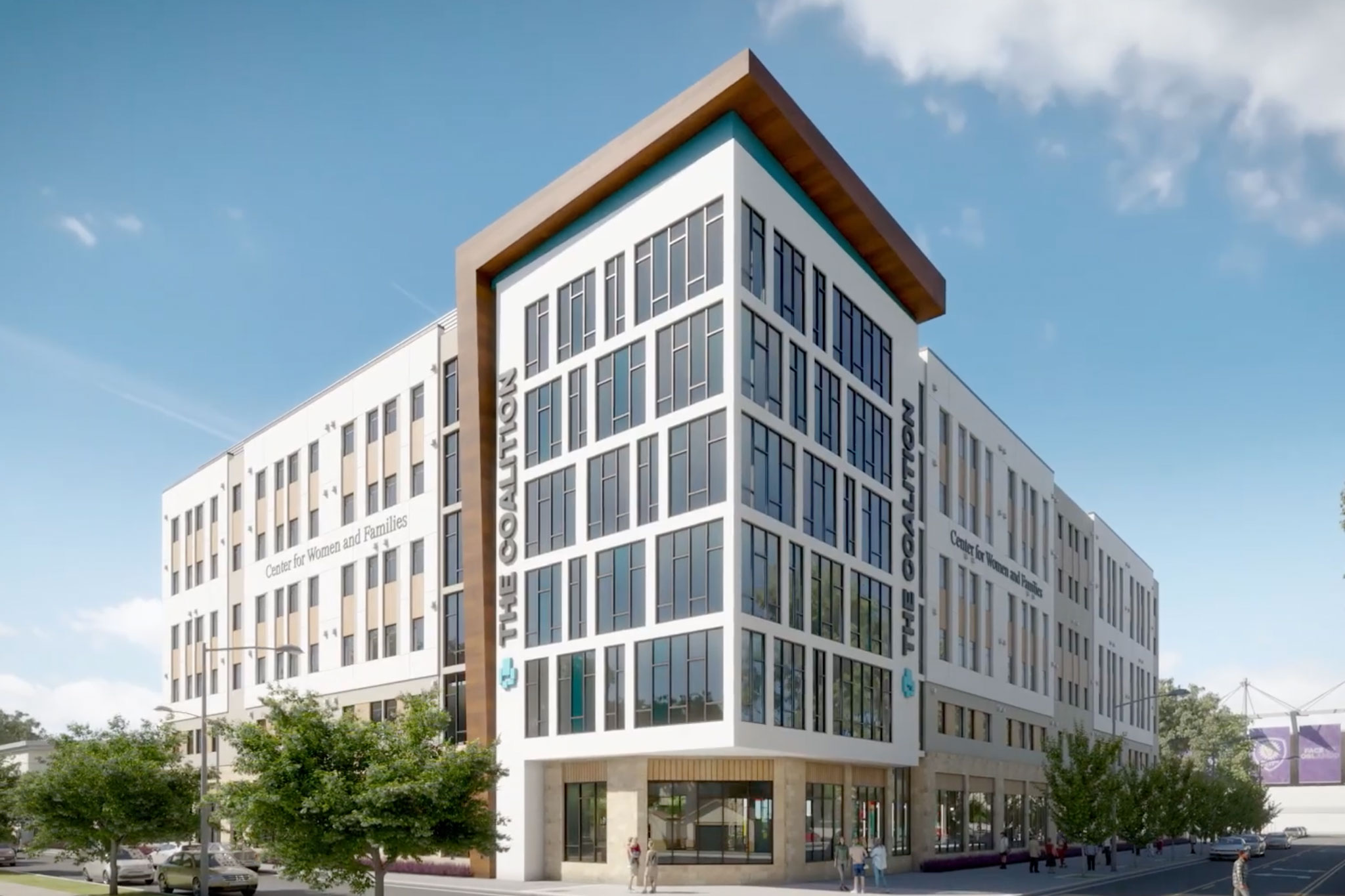
Rendering provided by Coalition for the Homeless of Central Florida
Brad Butterstein Leads $60 Million Expansion at Coalition for the Homeless
In Orlando’s Parramore District, the Coalition for the Homeless of Central Florida has spent more than four decades serving individuals and families in crisis. Today, under the leadership of CEO Brad Butterstein, the organization is preparing for one of the most significant expansions in its history.
Butterstein, who stepped into the CEO role in July 2025 after six years on the board, now oversees a campus that shelters about 500 people nightly and serves roughly 800 individuals each day through onsite and outreach programs.
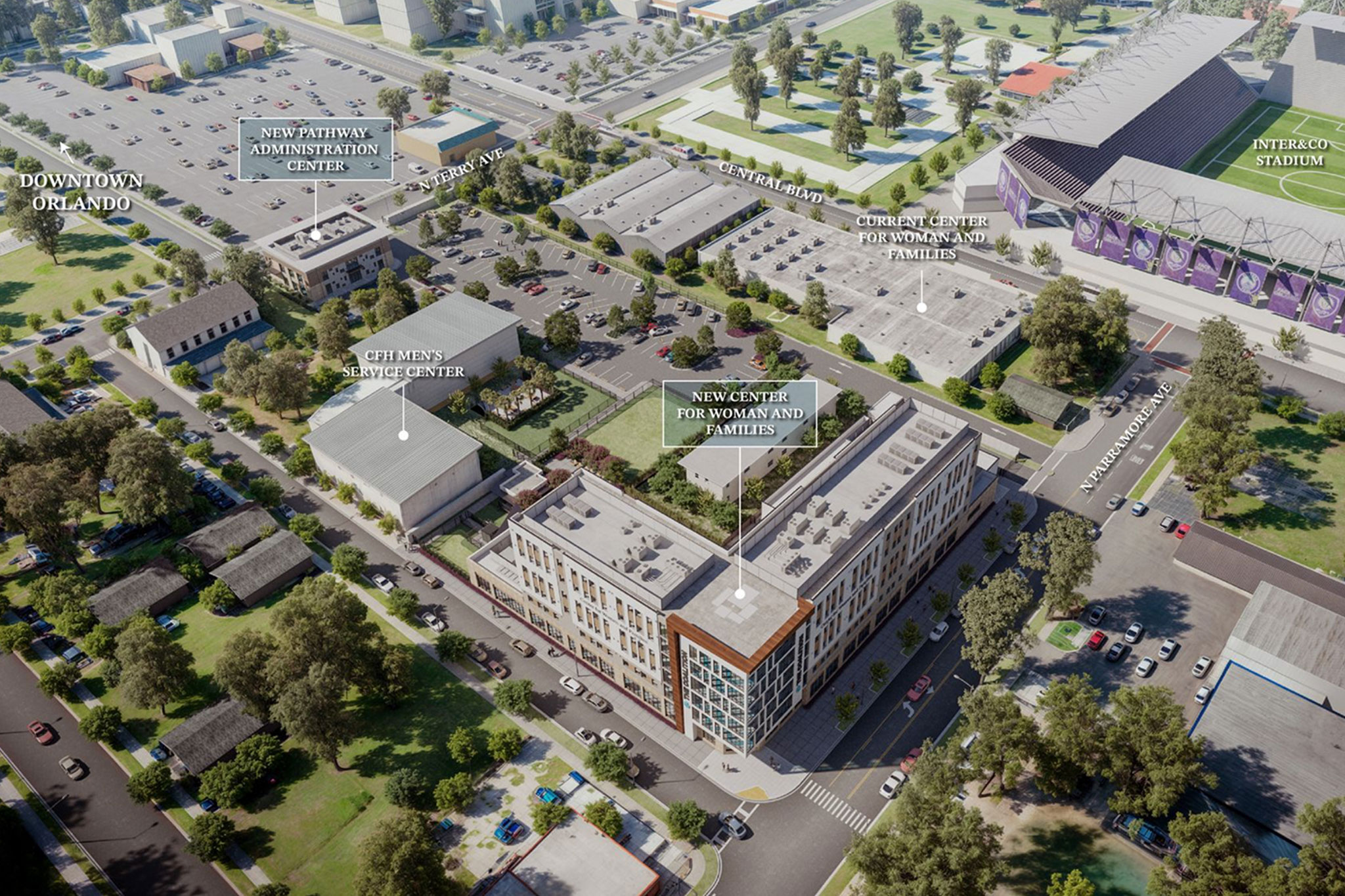
Located near InterCo Stadium in Parramore, the entrance to the Coalition is gated with security to make sure people are protected.
A New Chapter Underway
The Coalition recently secured a major level of funding that will allow it to move forward with a $60 million transformation of its campus in Parramore.
The scale of the project is matched by the effort behind it.
About half of the funding has come through public investment, including support from the City of Orlando, Orange County, and federal funding secured with the help of Maxwell Frost.
The rest has come together through relationships built over time. Corporate partners, foundations, and individual donors have contributed roughly $20 million so far, bringing the total raised to around $50 million. The remaining $10 million, Butterstein said, is an opportunity to bring even more of the community into what’s being built.
“It’s a true partnership,” he said.

The project will expand capacity, but it also reflects a shift in how the Coalition is thinking about the experience of the people staying there.
Mimi Coenen, who has served as COO since 2023, said the design moves away from large, shared environments and toward smaller, more intentional spaces.
“What makes me excited about our new Center for Women and Families is the thought that’s gone into the design,” Coenen told Orlando Life. “We’re moving away from large congregate settings into smaller, more intimate rooms with just three individuals, then a Jack and Jill bathroom, and then three individuals on the other side. This will really help individuals facing the crisis of homelessness to have smaller spaces. It’s more intentional, it’s more private, and I can’t wait to see how the guests feel.”
The changes coming up are about creating an environment where people can feel a sense of privacy and dignity while they work toward stability.
“This is about providing more hope and dignity,” Butterstein said while walking the property during Orlando Life’s recent visit. The project will add a six story, 105,000sft Center for Women and Families, increasing shelter capacity with 112 additional beds and introducing transitional housing designed to help individuals and families move toward stability.
Beyond housing, the expansion reflects a broader shift in how the Coalition approaches care. The new facility will include an onsite medical clinic, expanded childcare and youth programs, and workforce development partnerships aimed at addressing the full scope of challenges individuals face when experiencing homelessness.
Currently, many services rely on outside partners. Basic medical needs often result in emergency calls, something Butterstein hopes to reduce significantly once the new infrastructure is in place.
“We want to take a more holistic approach,” he said. “From health to employment to housing, it all connects.”
Rising housing costs and economic pressure have increased demand for services across Central Florida, leaving the Coalition operating at or near capacity. At the same time, outcomes have improved, with about 61% of guests moving into stable housing, up from 55% in recent months.
The new development is expected to open in early 2028, with construction beginning in phases over the next two years.
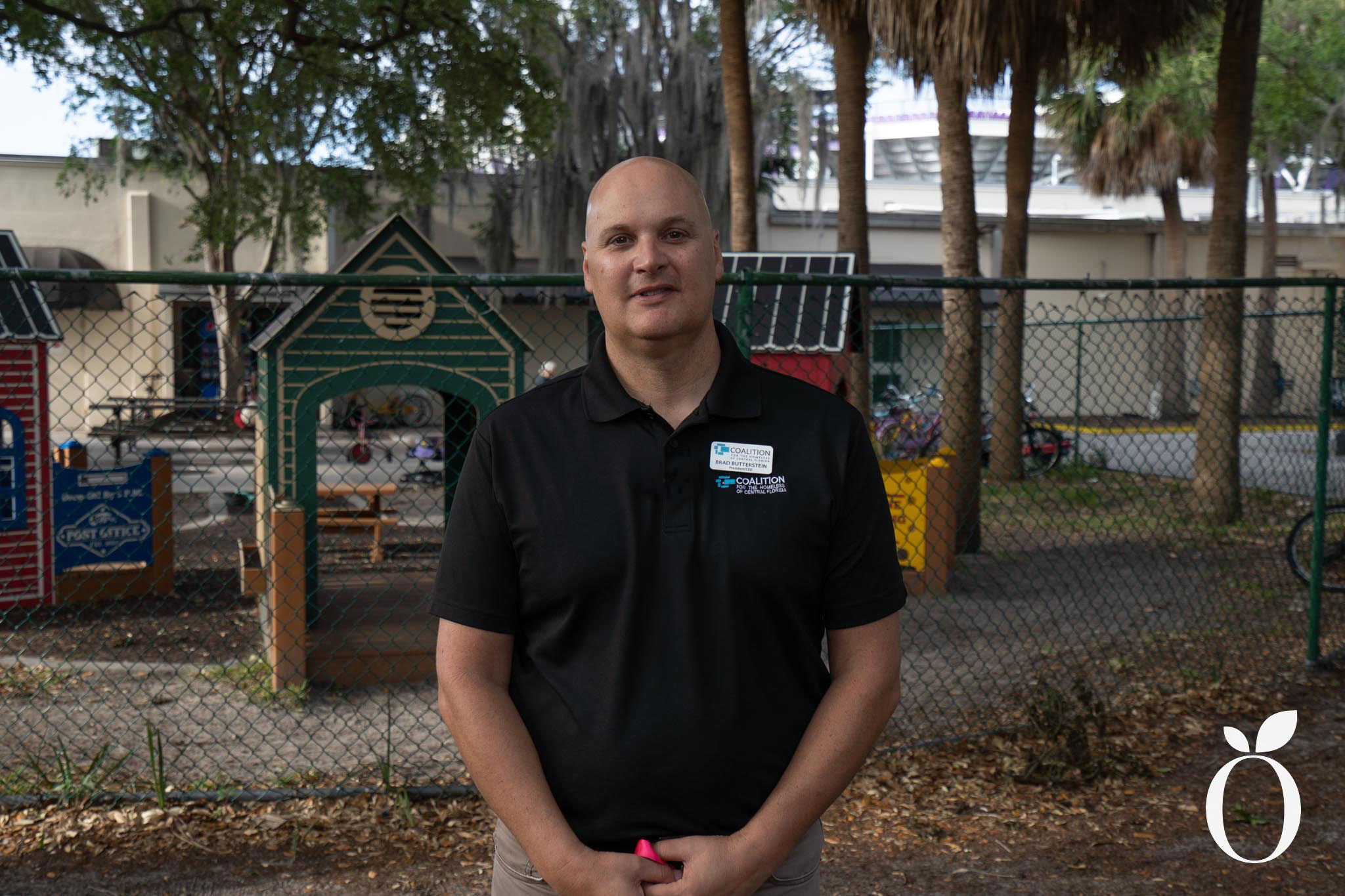
Brad Butterstein, CEO of Coalition for the Homeless in Central Florida | Photo by Orlando Life
Before Joining the Coalition
Before joining the Coalition for the Homeless of Central Florida, Brad Butterstein spent 26 years in manufacturing, working his way up at Data Graphics Inc. from accounting and sales roles to president. Along the way, he built a parallel connection to nonprofit work, serving on boards and volunteering across Central Florida, including Second Harvest Food Bank of Central Florida, where he also served as board chair.
Giving back was something Butterstein and his family leaned into together, with his children growing up around service, spending time volunteering and experiencing firsthand what it means to support others in the community.
That ongoing connection to the community eventually led him to the Coalition, where he joined the board in 2019 before stepping into the CEO role in 2025.
That experience, he said, continues to shape how he leads today.
“This is a business,” Butterstein said. “We have accounting, IT, operations, and development. Everything you’d expect in a company. The difference is who we serve.”
That operational mindset shows up in how the Coalition measures success and builds systems around it, from structured guest programs to partnerships across the region.
It also influences how he views the organization’s role in Orlando.
“This is a community issue,” he said. “The men, women and children here are part of this community. Our job is to help them get back to stability.”
On campus, that mission is clearly seen in the daily rhythm of people. Residents leave for work in the morning, children head to school, and staff and volunteers move through a coordinated system designed to support progress.
For Butterstein, the goal is to create clear pathways out of crisis.
The construction plans that are preparing to move forward as funding gaps close is helping the Coalition enter a new phase that aims to meet the growing need in Orlando with expanded capacity and a deeper offering of services for a bigger impact.