Coffee Shop Thoughts at Bynx Coffee in Orlando
April 8, 2026
A Dairy Funny Night at Milk District Comedy
April 23, 2026
Boris Garbe and His Legacy of Putting the Artist First
We come across people who seem to arrive at their life’s work in a straight line, but as you dive in and get to know them, it’s never that simple.
Boris Garbe is the founder of Mills Gallery and when you ask him how the Gallery began, he doesn’t offer you a polished origin story or a rehearsed version of ambition dressed up as altruism. He says, plainly, that he first opened the gallery wanting to become rich and famous.
Boris is brutally honest, sometimes unapologetically so. He’s not particularly interested in sounding politically correct for the sake of it. What you get instead is something rare, something refreshing. A person willing to tell the truth about himself, even when that truth is messy.
Art was always around Boris growing up. His father was an architect, and creativity lived in the household. But his own path didn’t start there. When he began working on what would later become Mills Gallery, he had no business background and spent years as a Spanish and sign language teacher.
“I had no business background. I was a Spanish and sign language teacher, and I decided to do this,” he told Orlando Life. Boris shared he was a boy who grew up between cultures, wasn’t a good student and didn’t easily fit into the classroom. A student at Winter Park High School, he faced severe bullying from fellow students which deeply added to his struggles. Later in life when he pursued teaching, he used his past to become a teacher who knew how to reach the children who felt misunderstood, as someone who was once one of them.
Garbe was born in Berlin and spent his formative years in Nicaragua before moving to Orlando nearly five decades ago. That experience of moving between countries and cultures shaped him in lasting ways. It gave him a broader way of seeing people, a sensitivity to difference, and an ability to connect across backgrounds in a very instinctive way. By the time Orlando became home, he already understood how to observe, how to listen, and how to exist between worlds.
He speaks Spanish, English, German, and sign language. He carries an intellectual sharpness that reveals itself the longer you listen to him speak on life, however he never presents himself as someone who moved through life with ease. In fact, he will tell you the opposite. When he became a teacher himself, he became the kind of educator he once needed. He knew how to connect with students who felt overlooked, the difficult ones, the misunderstood, the children who did not respond to the usual methods. “I taught the kids that were like me,” he says.
Those same instincts would later define the way he worked with artists.
Another part of Boris’ personal life would shape him just as deeply. He has spoken openly about his battle with alcoholism. The story matters because it changed the way he saw himself, and because it changed the way he saw other people. Recovery asks for honesty that strips everything back. Through AA, he was introduced to art. It was not an academic introduction and it was not about status. It happened in a place where people were already confronting themselves, trying to understand the harder parts of their lives. In that setting, art carried a different kind of weight.
By the time the gallery entered his life, sobriety had already become part of his foundation. Mills gave that foundation structure and it gave Boris purpose. It gave him a place to put his energy, his voice, his intensity, and all the parts of himself that once had nowhere meaningful to go.
That is what makes Boris Garbe such an interesting figure in Orlando’s cultural landscape. He did not arrive in the art world through prestige or pedigree. He arrived through life experience.
He is someone who spent much of his life feeling like an outcast, and yet he carries an enormous presence. He is intellectually sharp, deeply observant, fluent in multiple languages, and difficult to reduce into one neat category. He is self aware, emotionally transparent, eccentric but his best attribute is his resilience. That presence is what makes Mills feel distinct.
Over time, Mills developed a character of its own within Orlando’s art scene. Garbe describes it less like a showroom and more like a hub. People come there to exhibit, but they also come with questions. They come looking for direction, perspective, and support. Some of that support is practical.
How they present their work, how they talk to collectors, how they build a career instead of waiting for someone to discover them. “People like what they see, but they need just one more bit of information,” Garbe says. “And if you, as the artist cannot do that, then the sale probably won’t happen.”
Garbe began to notice that many of the artists walking through those doors were carrying more than portfolios and paintings. They were carrying instability, addiction, poverty, mental health challenges, and the complicated emotional reality that often lives behind creative work. He recognized it because, in his own way, he knew struggle too. He understood those issues from a core place. His empathy was genuine because it came from experience and that changed everything.
What began as a business became a place where artists could grow. They came back for guidance, for perspective, for help, for honesty. Garbe could speak to them in a language that went beyond art theory or sales strategy. He understood, instinctively, that creativity and pain often live close together. When we asked him if there was a single moment when he realized Mills could become something more than just a gallery. He paused and said, “It wasn’t a moment, it was several moments. It was when artists started coming back not just for another event, but to ask me for advice or help.”
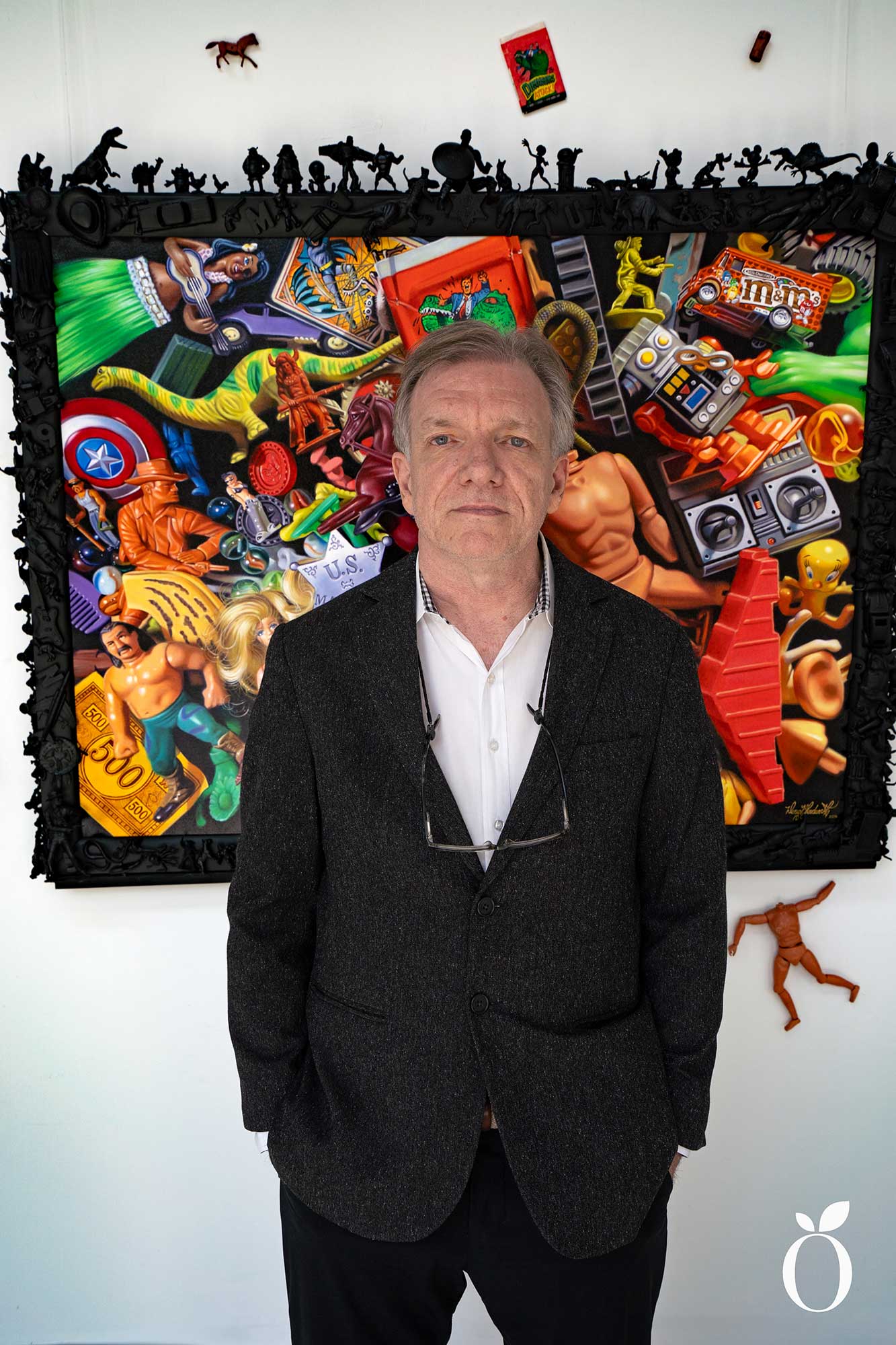
Boris Garbe stands in front of an art piece by Doug Bloodworth | Photo by Dave Vanz, Orlando Life
The Artist Comes First
Garbe believes that every piece begins with a person, their life, their discipline, their struggles, and their voice. “Every artist needs to be reminded that the art they create is about themselves. You are basically journaling your life,” he says.
If that is ignored, the work loses its meaning. It is a perspective that has become even more relevant as conversations around AI and authorship continue to grow. Technology can produce images. It can replicate output. What it cannot replace is the lived human experience behind it.
“Without the artist, there is no art,” Garbe says, a line that has become central to how he sees the future of creative work. That is the distinction he holds onto, and it is what he wants Mills to stand for.
Garbe wants artists who understand that their work is not random, that it comes from their lives and their inner world experiences. The work may hang on a wall, but it begins somewhere much more intimate. He insists that artists learn how to speak for their work. “A painting, no matter how powerful, cannot introduce itself. It cannot explain its own story. The artist has to do that.”
His approach can be blunt, but it’s rooted in belief. He wants artists to take responsibility for their careers, not wait for recognition to arrive by fate. At Mills, the expectation is clear. Art matters deeply, and it also exists in the real world of presentation, connection, and business. That balance is part of his legacy too.
Too often, he says, people approach art the way they might approach furniture, searching for something that matches a room rather than something that reflects a life or makes them feel something.
“In the United States, art is furniture,” Garbe says. “People come into the gallery and say, "I have a white leather sofa, I need something that pops.”
That mindset is one of the tensions he pushes against. For Garbe, the value of art is not in how well it fits into a space, but in what it reveals about the person who created it.
He also believes Orlando, in its own way, has done more right than many cities. “Orlando is actually doing a fantastic job. Not just in people attending events, but supporting the arts financially,” he says.
Still, he is quick to point out that support has to go beyond showing up. A healthy arts ecosystem depends on people who are willing to invest in it, sustain it, and take responsibility for its future.
“Please support your artists. Not just by showing up and enjoying the free wine, but help us, guide us,” he says.
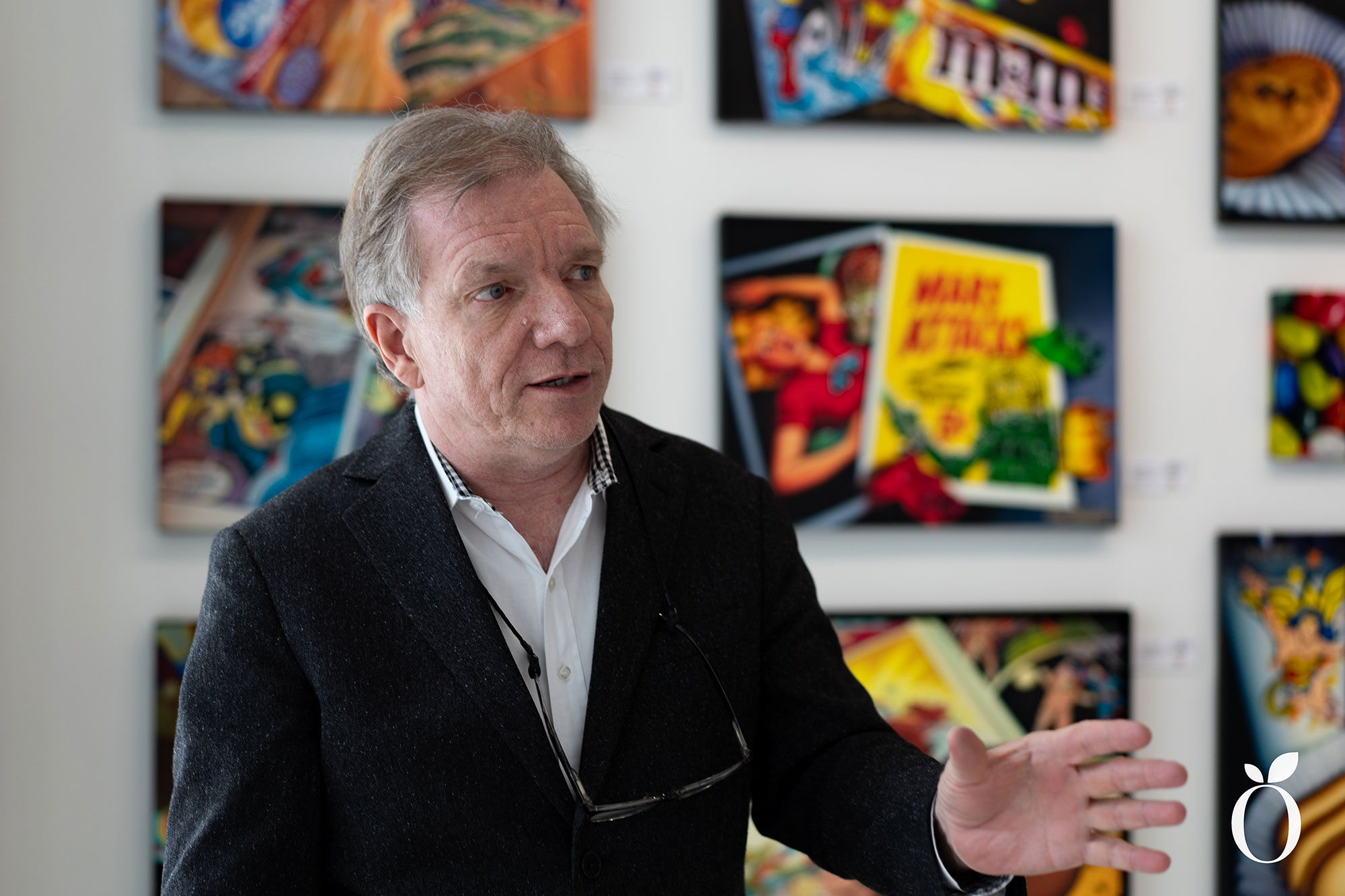
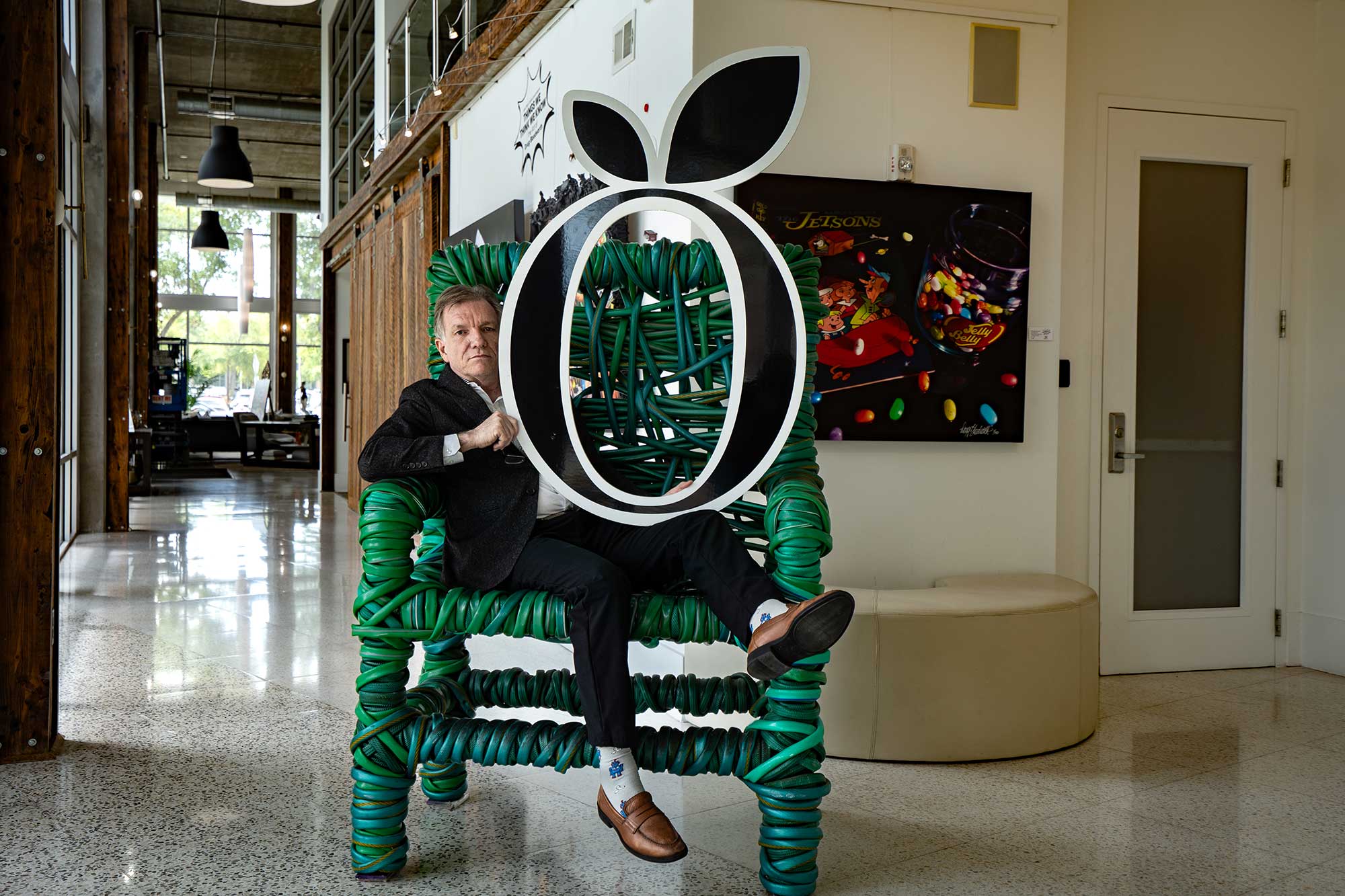
Boris Garbe at Mills Gallery | Photo by Dave Vanz, Orlando Life
Legacy
When asked about legacy, Garbe does not romanticize it. At 60, he speaks about mortality with unusual frankness. He does not seem preoccupied with preserving his own name, but more about his belief that, "the artist matters more than the art."
He speaks proudly of the artists, curators, collaborators, and creative leaders who have moved through the gallery and used it as a platform for their own growth. He measures impact based on lives changed and the impact people have on the community. That, more than recognition, appears to be his real measure of success and legacy.
While Boris has done so much for artists in the community, Mills Gallery has done something for Boris, too. After his battle with alcoholism, the gallery gave him purpose. It gave him structure and responsibility at a time when both mattered. It gave him a reason to show up consistently for something outside of himself. He found meaning in guiding people whose struggles he understood in a deeply human way. He found a place where his honesty, his intensity, his empathy, and his instincts as a teacher could all live together.
Everything that once seemed separate now feels connected.
In 2025, Boris hosted his 1985 high school reunion at Mills Gallery. The young man who was once bullied stood in front of his former classmates and spoke openly about those experiences, saying, “Some of you know my high school experience wasn’t easy, but they were necessary. Today I’m leaving the bad memories behind because they don’t serve me.”
The child who didn’t fit in, the student who struggled, the person shaped through pain and being misunderstood, discovered something much larger than building a gallery that would make him rich and famous.
Boris Garbe found his stage at Mills Gallery by building one for others.
Defining the Orlando Life
After nearly 50 years in Orlando, Boris sees the city for what it really is, a mix of cultures, personalities, creativity, and energy. A place where people come to build something. A place where community still matters.
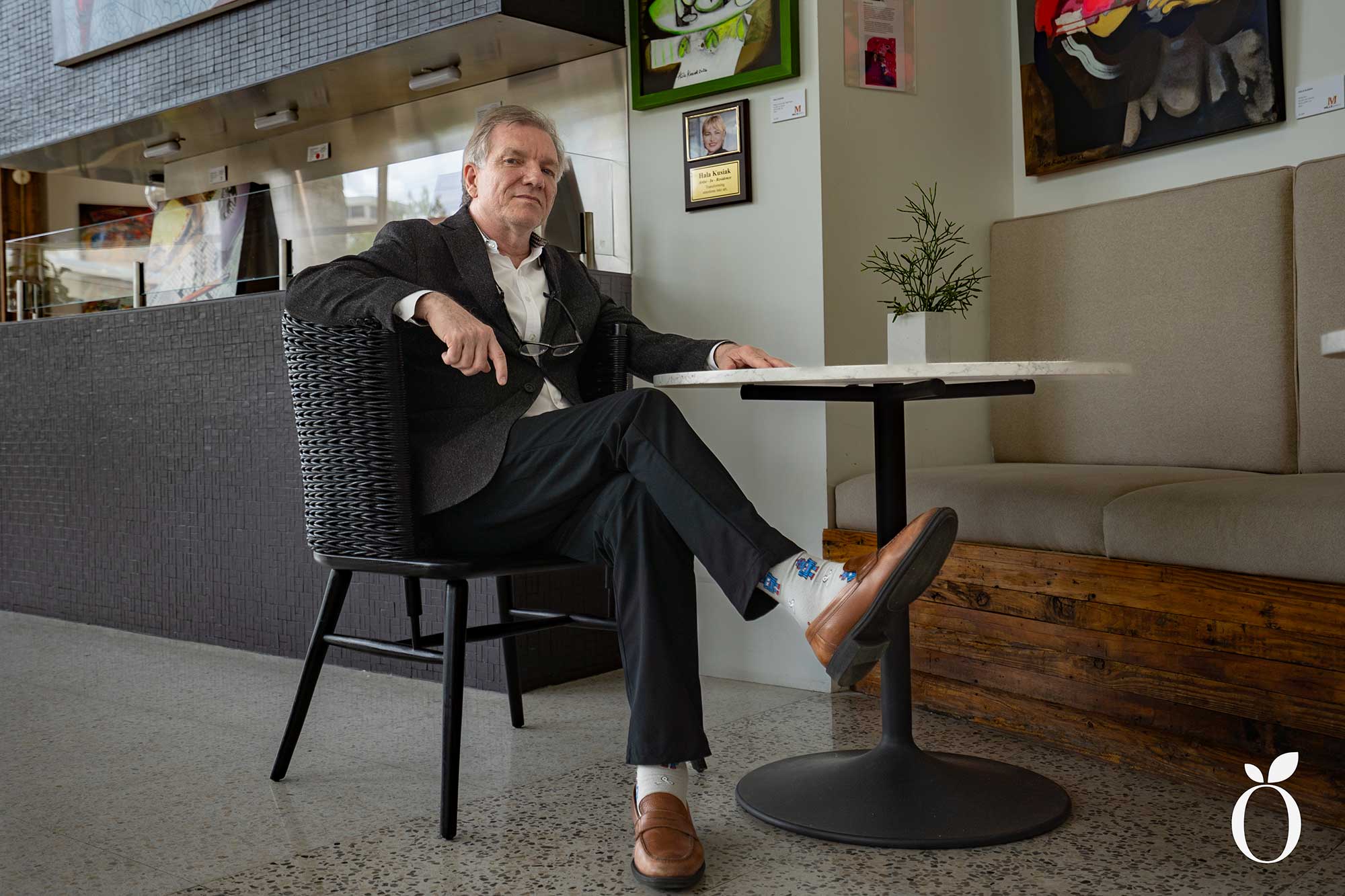
Boris Garbe at Mills Gallery | Photo by Dave Vanz, Orlando Life